Hi friends 👋🏻
This week, some hopefully-thought-provoking observations how different nonprofit organizations approach website projects ... and how this intersects with my business model.
Want links to recent emails or a sign-up link to share? Go to The Digital Landscape sign-up page
A client scenario I struggle with
Here's the situation:
I get an email or a consultation call booking from a potential client; a nonprofit org that wants to book me to work on a website refresh.
We get talking, and I work through the discovery topics I like to dig into:
- Who are the org's key audiences and what actions do they need them to take?
- What are the problems with the current website?
- Why are they taking on a website project now?
- How would we know a website refresh has been successful?
And during this conversation, I realize they're not ready for a website project.
By which I mean they're not ready yet. I could jump in a build a nice-looking, structurally-sound, easy-to-use new website, but it wouldn't deliver much value to the organization.
Why?
Typically it's because the team isn't on the same page about what the organization does and why. An organization that isn't ready to benefit from a website project often lacks:
- Clear positioning
- A good understanding of their core audience
- Alignment on what actions they want audience members to take
- Fragmented programming (often driven by chasing donor or sponsor dollars)
Now, circling back around to the part I'm working on getting better at!
In the past, there have been instances where I've overlooked these red flags and agreed to work on the project the client is asking for anyway.
I can see the issues, but the client is asking for a shiny new website so that's what I deliver.
Here's what I'm doing instead
Recently I've been trying a different approach.
If I run into one of these red flag you're-not-ready discovery calls, I'm letting the potential client know that I'd love to work on a website project, but there's another project they need to do first.
Most often, this is a positioning and narrative strategy engagement. The idea here is to gather the key individuals and help them get to a more consistent and coherent understanding of what the organization is doing, for whom, why, and how. Then we build some narrative strategy and core messaging around that.
I won't go into the details of how those engagements work, but it is SO MUCH EASIER to get into a big website project where that groundwork is thoughtfully laid first.
Instead of migrating a whole mess of pages and blog posts that are "all important", we get to thoughtfully produce a new website that is finely tuned to the right audiences, showcases the best work, and leads visitors to convert.
What does this mean for my business?
Yes, there's a risk that I lose business taking this approach.
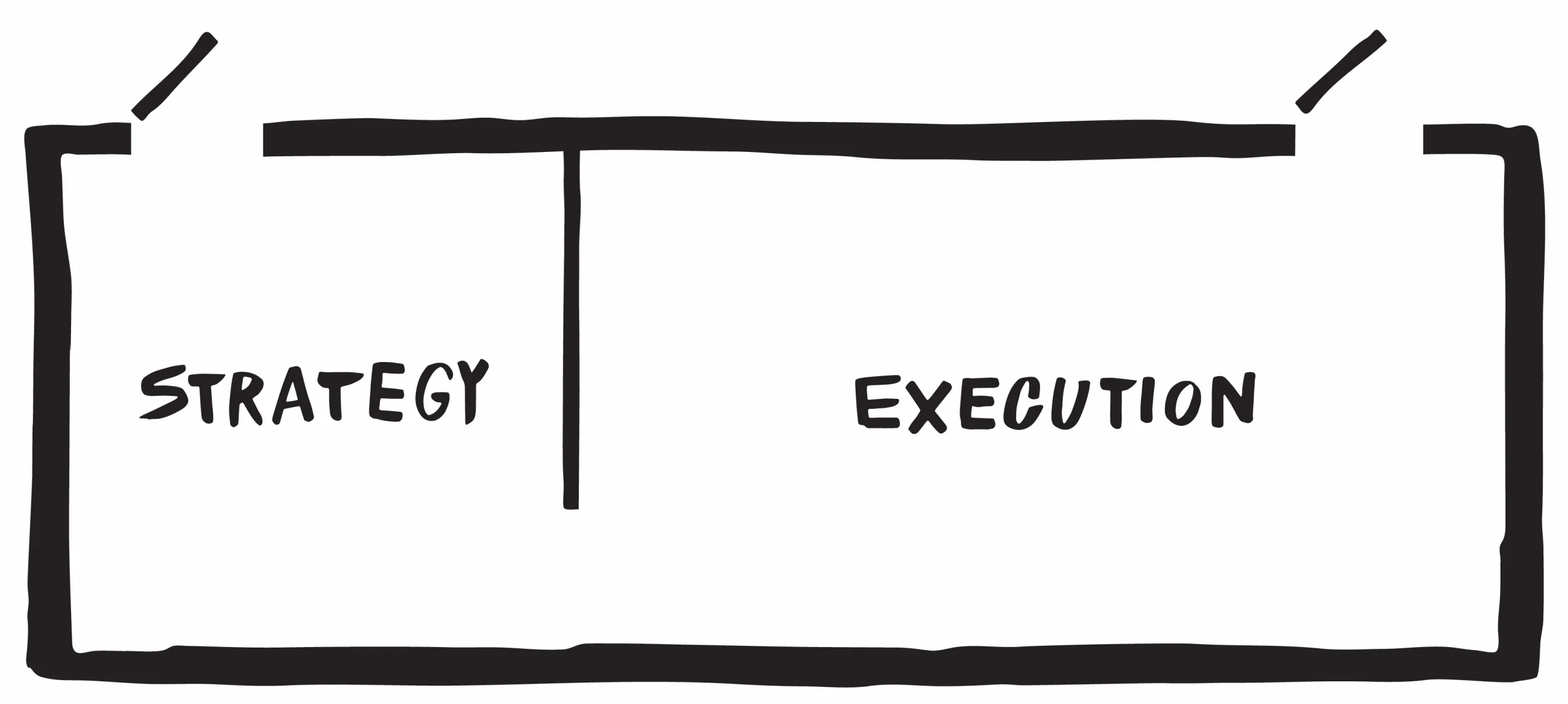
However, there's a model that has helped me get comfortable with this. David C. Baker (author and advisor to creative firms) wrote about a consultancy being a business with two rooms, each with a door through which clients can enter:
Applied to my business, I can provide higher-level strategic advising around communications, web, and digital strategy. Some clients approach me looking for that, through the door on the left.
However I can also do the execution of that strategy: that's website rebuilds, analytics implementation, etc. And the majority of the people that end up as clients enter through that execution door on the right: that's what they show up looking for.
In this model, however, you'll notice that once you're in the building, you can move between the two rooms, meaning I can try to deliver some strategic value to clients that arrived focused on execution. And in the inverse, I might end up doing a bit of implementation for clients that are focused on strategy.
This shift I described above – starting to have this hard conversation with potential clients about whether they're ready for a website project – is about encouraging more clients to come in through the strategy door.
And when a lead arrives wanting a shiny new website, reassuring them that we can absolutely work on that project, but that we need to do some other work first to make that website a success. And to do that work, we need to move into the strategy room for a while.
I'm curious how this lands, both for nonprofit org people who have gone out to bid for website projects in the past, and for other folks running they're own businesses who I know are also on this list 🙂
Until next time ✨
— Ed Harris (your digital strategy guide)
🤔 Have a question?
If you have a question about how to optimize your website or get more out of your digital marketing we’ll do our best to help out. Hit reply and send us a message and we’ll get in touch.
🔗 Affiliate Disclosure
Some links to products or services in The Digital Landscape emails and on the Blue Hills Digital website are affiliate links. This means we may receive compensation in return for new customers we refer. We only recommend products and services we use and love, and this helps us fund the creation of educational content for subscribers like you!
✋ Want to stop receiving these emails?
You're receiving this email because you signed up either at the Blue Hills Digital website, or on my personal site at edharris.me.
You can update your preferences or unsubscribe using the links below. No hard feelings!